Tuesday, May 31, 2011

Jazz, Books & Talking to Strangers in DC


So during my Maryland/DC excursion this past weekend, I had to step inside of a few local bookstores.  The geek that I am wouldn't allow me to pass up a chance to browse through books, some new, some used, all valuable of course.  I first stopped into Busboys & Poets located at 14th and V. St. in DC. I wasn't in the mood to sit down and have a drink. I went straight for the poetry section. There I found books that I've never actually seen because my nose has been in my MFA books for the last 2 years. While in the poetry section, flipping through the glorious pages of several books of poetry I made a list of the books I planned to purchase and read : Femme du Monde: Poems by Patricia Spears Jones, Life on Mars: Poems by Tracy K. Smith, The new black by Evie Shockley, Totem by Gregory Pardlo, Blood Dazzler by Patricia Smith and many others. Some of the books I picked up were signed by the author, others weren't. I found myself feeling like a book groupie. I wanted to chase the words, wherever they might lead me. Perhaps they would lead me to write new poems. That's always good.


Later, I found a gem of a bookstore in the Adams Morgan area, Idle Time Books located at 18th Street, NW.  The store manager, a bright eyed man wearing glasses who looked like a playwright was behind the counter.  I glanced at the DC Jazz Festival poster hanging on the wall near the front door.  A picture of one of the featured artists, Bobby McFerrin caught my eye.  I've never been to the Jazz Fest, always wanted to go. I asked the manager if they had anymore posters (knowing I could look on the internet for the schedule, but what the heck I was in the mood to collect brochures) with the full festival schedule.  "No, we don't generally keep a bunch of them.  If we did everyone would give us stuff and we'd have to lay it out all over the counter..." Yeah, I understand. Bookstores certainly don't need extra clutter.  There were wall to wall books and carts with books in them.  The books outside the store, in a cart, were being sold for somewhere around $1 maybe a little more, maybe a little less.  The sign read that you have to come inside and pay for them.  Makes sense.   

Jazz was playing in the background at the store.  There was an elderly black man talking to the manager.  The man was enjoying the ambiance.  I heard him ask the store manager, "Is that 'Kind of Blue'?"  He was talking about the song playing in the background.  I grew up listening to jazz music.  I knew the song wasn't "Kind of Blue" or even somewhat blue, it was "So What" by Miles Davis - one of my favorite, upbeat jazz songs.  So I said so.   "It's 'So What'," I told the store manager and the elderly man.  "Yep, she's right.  She knows," said the manager.  "So you like jazz?" The elderly man asked me.  "Yes, I do," I said.  We chatted for a few minutes about jazz greats.  He wanted to quiz me, see if I was really a jazz lover.  It was refreshing to talk to random strangers and not worry if they're going to ask me for $1 right after (if you live in NYC you know what I mean).

After talking with the man, I walked the aisles, pulling out all of the books that reached out to me like Mozart and Leadbelly by Ernest J. Gaines, Oliver Twist by Charles Dickens, Tina McElroy Ansa's Ugly Ways and Baby of the Family, my friend Gloria Malette's Shades of Jade and a Robert Frost poetry volume.  I felt like I had a touch of literary ADD -- I couldn't focus on sitting down with one book.  The joy of inhaling the smell of old and used books overcame me.  In every aisle at least one person was sitting on the floor reading.  A few people were browsing through postcards.  We were all synced up to these old books, not worried about tweeting or updating our status on Facebook, it was all about the now-of-books.  I kept trying to decide whether I wanted to ask the store manager how a bookstore that primarily sells used and out-of-print books is able to survive in this economy.  Let alone the competition from book lovers who've switched to digital e-readers.  He told me an interesting story of when poet Nikki Giovanni came into the store to browse the poetry section.  "I knew it was her," he said.  He knew it was her after checking a recent photo of her on the internet.  He said she was really nice.  Something else interesting he shared, "authors who come in and buy their own books."  It sounds funny, but I'm sure it's a reality.  If you're an author and your books are out-of-print, it's a blessing to find a bookstore that still carries them!  You may want to round them all up as keepsakes or sell them at some point.  The manager remarked that one author even asked, "Isn't it illegal for you to make me pay for my own book?"  The nerve.  If the author received a book deal, he or she was already paid for the books by the publisher.  Everyone needs to make a dollar, even the independent bookseller.  Buying your books out of a bookstore wouldn't be an odd thing for an author who's not self published or on Kindle.  While browsing, I was amused by the title of a book I had never heard of, Famous Writers School: A Novel.  I wondered what the book was about. Well if you can't be a rock star, perhaps the next best thing is being a famous writer.  But you can't go to school for that.  Can you? (sarcasm).

A couple of hours later after hanging with a friend, I ran into the elderly man I met at Idle Books.  He was sitting on a bench in front of Starbucks, enjoying the breeze.  Probably humming a little jazz too.  "Leaving so soon?" he asked.  "Yeah, but I'll be back."  I smiled and headed to the Metro station. 

Friday, May 27, 2011

Word Count Matters


Word count matters when it comes to having your writing published.  With the exception of poetry, if your preparing to submit to an agent or editor they'll want to know what your proposed or actual word count is.  As you're writing it's good to keep this in mind.  Knowing that you may have to revise your work many times over anyway, don't assume that because you've written a 500-page novel with a gazillion words that none of it will be cut.  This doesn't mean that some books aren't the exception to the rule (ie. Harry Potter).  But if your novel or memoir doesn't call for all of those extra words, it's best to revise and save all of your various versions.

Writing forever into infinity with no goal in mind can put you in a precarious position when it comes to submitting your work.  If you don't take the time to edit your work down to meet the acceptable word count range, it could be more work for an agent or editor who would rather consider a writer who has done the proper work.

Check out fiction genre word count rules.

Nathan Bransford on novel word counts.

Tuesday, May 24, 2011

Children's/YA Author Events at 2011 Book Expo America


Book Expo America (BEA) opens today in New York City at the Javits Center.  Among the many featured authors, publishing professionals, panels and exhibits is the ABA's Day of Education, BEA YA Author Buzz, Speed Dating with Children's Authors, Tea with Children's Authors and Children's Book and Author Breafast.  Featured children's/YA authors include Walter Dean Myers and son Christopher Myers, Sarah Dessen, Jerry Pinkney, R.L. Stine, Brian Selznick and more.

Check out the schedule of children's book programming here.

YA Writers Meet Audrey, a Teen YA Reviewer with Tips for You!


Audrey is a teen who writes YA book reviews for Write4Kids! and for her own blog Audrey Reads and Reviews. 

I've come across a few of Audrey's tips for YA writers over the last several months.  Check out Audrey's new tip for writers: No Perfect Characters, Please! 

Barnes & Noble Set to Release Nook Simple Touch Reader


Barnes & Noble will release the new Nook Simple Touch Reader, priced at $139 on June 10th.  The reasonably priced Nook competes with the Amazon.com Kindle Reader of the same price.  Read more about the Nook Simple Touch Reader.

Parents think the darnedest things! NEW BOOK: Go the --- to Sleep


New children's picture book Go the --- to Sleep by Adam Mansbach is titled with a phrase that parents may think but not say, when trying to put a child to bed.  The book has such a cute cover - sleeping boy cozy on top of sleeping tigers.  Check out review and New York Times article "Raising Children Is Heck." 

Saturday, May 14, 2011

ARTICLE: Making It Online via TNJ.com

Here is an excerpt of an article I'm mentioned in via The Network Journal (TNJ.com).  


Making It Online

Kweli Joins the Ranks of Web Publications
For better or worse, the Internet in the 21st century has certainly changed the ways we access information, be it academic, journalistic or literary; challenging the merit of content and offering a place for creative prose to flourish at the same time. The closings of bookstores nationwide along with the decline of print publications — particularly those with an artistic focus and a specific audience in mind — continue to leave readers, writers and publishers wondering about the future of hardcover books and outlets for literary works in general. Although low circulation, loss of advertising dollars, and even concern for the environment have led to rethinking strategies within the publishing market, the Internet has been the impetus behind the emergence of countless online publications. In 2009, Poets & Writers magazine, in the article “From Page to Pixels: The Evolution of Online Journals,” commented that “Today’s best online journals offer innovation as well as visibility.” So with a strong belief on that promise, Kweli Journal (www.kwelijournal.org), in 2009, joined the growing number of online publications.   CLICK TO READ THE REST OF THIS ARTICLE...

Friday, May 13, 2011

After the MFA: 10 things I learned


My journey as a full time graduate student in the MFA in Creative Writing degree program at The New School in NYC, has come to an end.   I'm a graduate!!

So many people asked me, "DuEwa, why another Master's degree - you already have one?" and "Why an MFA, you're already a writer."  I felt the need to immerse myself in the writing life in a different way.  I wanted to study the craft and expand my knowledge in ways that I hadn't before.  I wanted to be linked to serious writers and learn from esteemed professors who have published or at least have taught writing for many years.  Did I expand my knowledge? Yes.  Did I study and link up with writers I did not previously know?  Yes.  Was the journey difficult at times?  Of course.  Am I glad I applied to the program, went through it and finished?  TOTALLY!!!  A mentor once said to me, "Anything worth having is worth struggling for."  And I did. 


I was lucky to have already been published in journals, magazines and online prior to coming into the MFA program, but that experience did not prepare me for my two year journey.  The MFA program is its own world.  They don't care what you've done prior - it's all about what you can show right now as a writer and how you contribute to the program. 


10 things I learned from my MFA experience:


1.  Listen to the criticism and feedback during workshop without being defensive or arguing.  Reflect upon all feedback whether you feel it applies to you or not.  If anyone gives you criticism that is disrespectful and more like a personal attack, take a mental note, but refrain from verbal sparring.  Let their immaturity show through while you take the high road.


2.  Talk to previous graduates - alumni who also attended your school and hear what their experience was like.  But do not use what they tell you as a barometer.  Go in with an open mind, not baggage from someone else.


3.  Stand up for the perspective or ideas you have, even if it differs from that of your peers or instructors.  And do it in a way that is mature and respectful.  Be prepared to back up what you're saying with research if need be.


4.  Do not expect to receive a great amount of help or support from anyone who has *shown* you that they do not *get* or agree with what you're trying to do.  You have to believe in yourself and know your abilities as well as your limits.


5.  Sometimes, it's best to keep your thoughts and opinions to yourself - no one needs to know everything you think.  Your one opinion may not carry as much weight as the group or collective opinion does.  Understanding this is part of being a mature student who is willing to grow.


6.  Network, network, network while you're in the program.  Attend readings, support authors, go to events your professors have.  You never know who you may link up with who holds the keys to a freelance writing gig, an agent contact or a paid reading/conference gig for you.  Send your writing out to publications and people who you believe can help you. 


7.  Realize that your instructors are people too.  They're not superhuman, or perfect or without flaws.  If you have a conflict, talk to them and address it either privately or at least in a way that will benefit everyone involved. 


8.  Revise, revise, revise.  Your writing is not *the sho-nuff stuff* unless it goes through the ringer many times over.


9.  It's okay to show others outside of the MFA program your writing, to get a different perspective.  You can listen to the feedback and decide which way you want to go.  Remember the source of creativity is you.  Your instructors and peers are there as a sounding board, but you have to be comfortable with the final product.


10.  Your MFA experience is what you make of it.  No one's going to hold your hand, stroke your ego or serve you up a publishing deal or agent on a silver platter.  Writing is work and can be extremely rewarding if you know how to organize your ideas and can devote the time and attention that your craft needs. 

Check out The Creative Writing Blog for information and perspectives on getting an MFA degree. 

Author Spotlight: Nathaniel Terrell

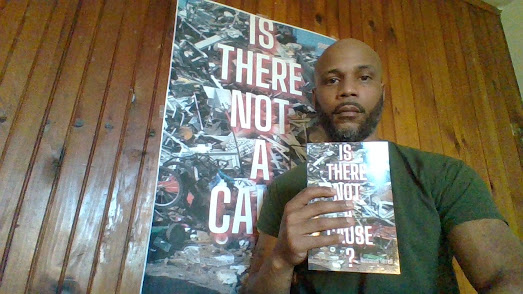
  Poet Nathaniel Terrell  Is There Not a Cause? by Nathaniel Terrell  Available at Atmosphere Press , Amazon , and Barnes and Noble . About ...